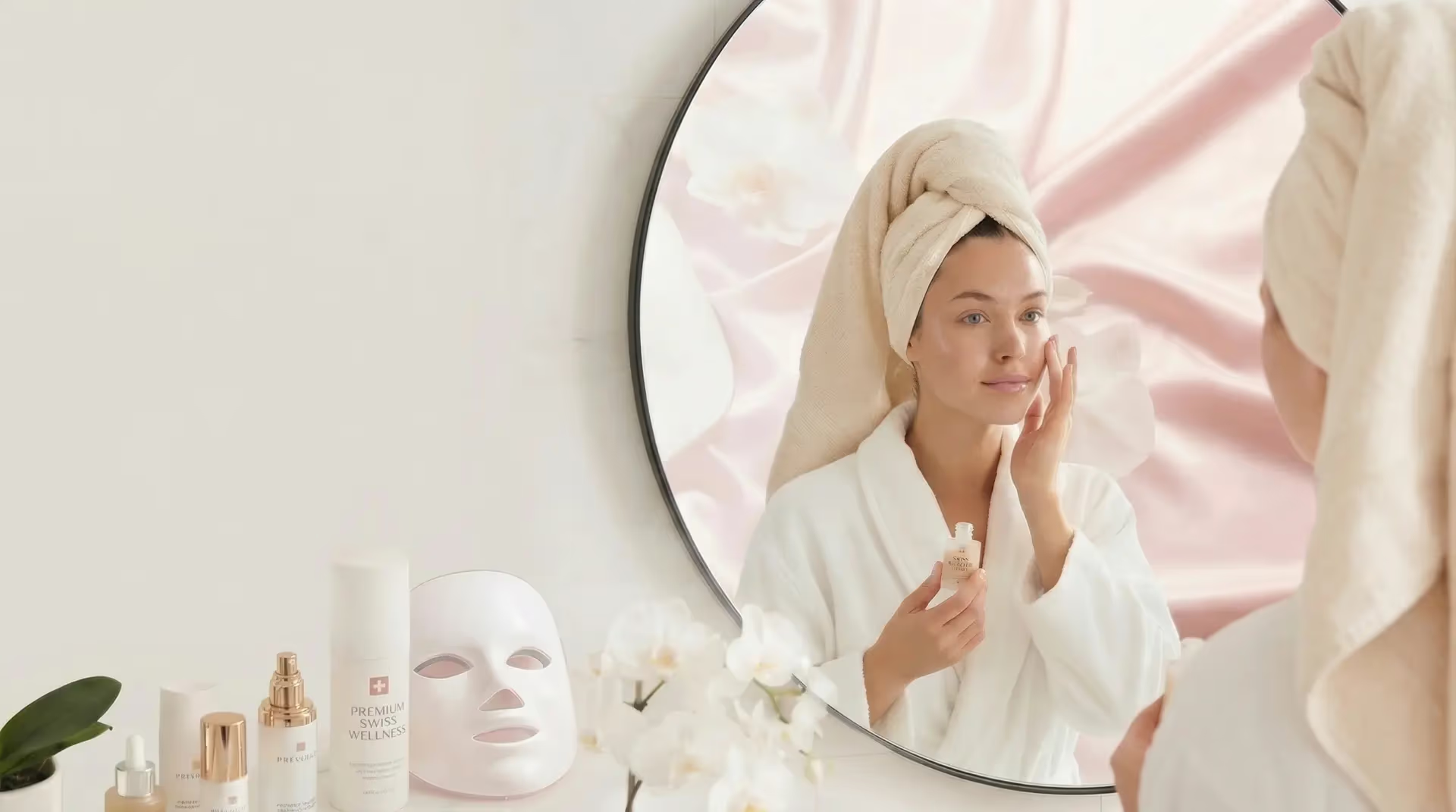
Red Light Therapy: A Guide for Swiss Women
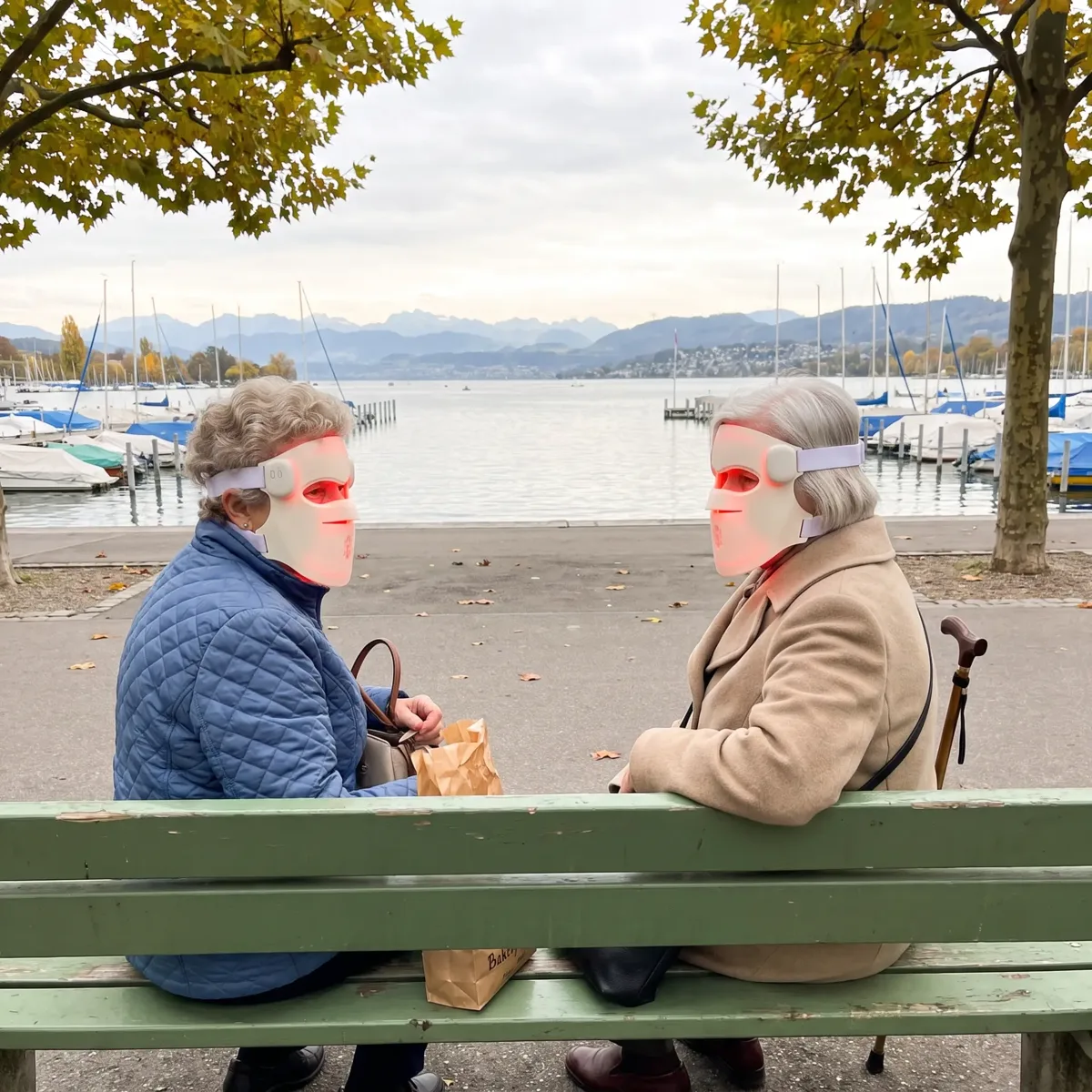
Red light therapy uses visible red light between roughly 630 and 660 nanometres and near-infrared light around 850 nanometres. The wavelength determines how deeply the light reaches into the skin. Ten minutes per session is the usual framework, three to five times a week.
01
What difference does the wavelength make?
Red light between 630 and 660 nm is absorbed mainly in the upper layers of the skin. Near-infrared between 810 and 850 nm is invisible to the eye and penetrates further. Blue light around 460 nm has traditionally been used for blemish-prone areas.
A device offering several individually selectable wavelengths lets you choose, rather than giving you one fixed blend.
02
What has the research examined?
Wunsch and Matuschka published a controlled trial in Photomedicine and Laser Surgery in 2014 with 136 volunteers treated twice weekly with red and near-infrared light. They measured skin roughness by profilometry and collagen density by ultrasound.
A 2023 randomised controlled trial worked with 137 women aged 40 to 65 in a split-face design, one treated and one untreated side of the same face, across ten sessions over four weeks.
Both studies examined one particular device with particular parameters. That is the most important caveat when reading any result of this kind.
03
What time of day, and how often?
Most devices work in ten-minute sessions. Morning or evening is a question of your routine, not of physics. Consistency is what matters: a ritual you genuinely keep three times a week is worth more than a daily plan you abandon after a fortnight.
04
Where does it belong in a skincare routine?
On cleansed skin, before serum or moisturiser. A thick layer of product underneath the device serves no purpose. If you use retinol, separate the two in time and watch how your skin responds.
| Wavelength | Range | Typical use |
|---|---|---|
| Red | 630 to 660 nm | Upper skin layers |
| Near-infrared | 810 to 850 nm | Deeper layers, invisible |
| Blue | approx. 460 nm | Blemish-prone areas |
05
What to look for
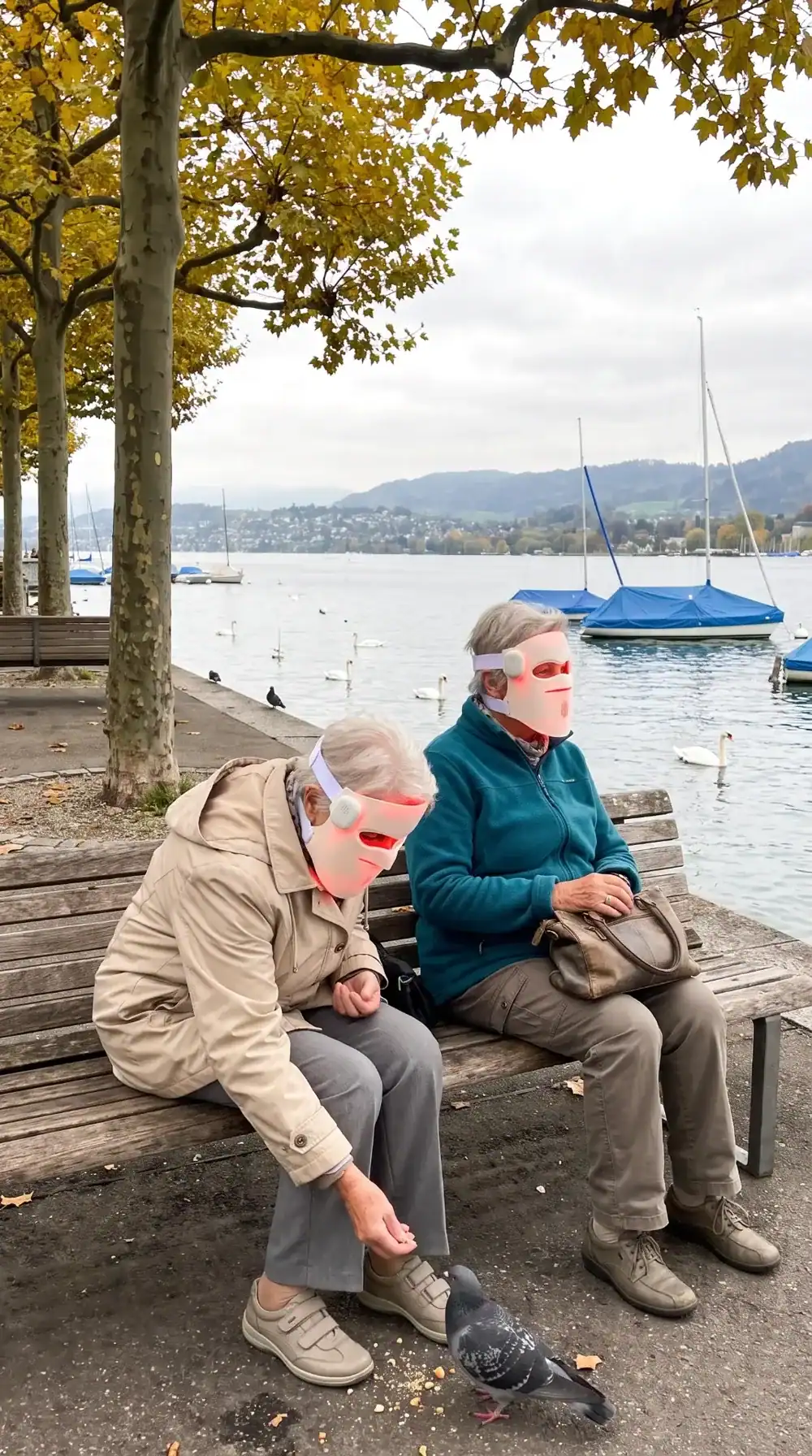
Cordless or mains-powered decides whether you have to lie still. A fixed ten-minute timer saves you counting. Soft silicone sits more comfortably than a hard shell. And check the warranty and who you would actually talk to before ordering.
The LUMÉRA NOVA 5D from SwissReformer offers 630 nm, 460 nm and 850 nm as individually selectable modes, runs cordless on a 60-minute battery and stops automatically after ten minutes.
06
Common questions
How long is a session?
Usually ten minutes, three to five times a week.
Do I need to close my eyes?
Yes, throughout.
Can I wear it while doing something else?
Only with a battery device. Mains-powered means staying by the socket.
Red or near-infrared?
Red works closer to the surface, near-infrared reaches deeper. Devices with separate modes let you use both.
Who should avoid it?
If you have light sensitivity, a skin condition, or are pregnant, speak to your doctor first.
LUMÉRA is a cosmetic device. The studies cited are the findings of their respective authors.